Chevrolet Silverado: Driving Information / Hill and Mountain Roads
Driving on steep hills or through mountains is different than driving on flat or rolling terrain. Tips include:
- Keep the vehicle serviced and in good shape.
- Check all fluid levels and brakes, tires, cooling system, and transmission.
- Shift to a lower gear when going down steep or long hills.
Warning
Using the brakes to slow the vehicle on a long downhill slope can cause brake overheating, can reduce brake performance, and could result in a loss of braking. Shift the transmission to a lower gear to let the engine assist the brakes on a steep downhill slope.
Warning
Coasting downhill in N (Neutral) or with the ignition off is dangerous. This can cause overheating of the brakes and loss of steering assist. Always have the engine running and the vehicle in gear.
- Drive at speeds that keep the vehicle in its own lane. Do not swing wide or cross the center line.
- Be alert on top of hills; something could be in your lane (e.g., stalled car, crash).
- Pay attention to special road signs (e.g., falling rocks area, winding roads, long grades, passing or no-passing zones) and take appropriate action.
 Driving on Wet Roads
Rain and wet roads can reduce vehicle traction and affect your ability to stop
and accelerate. Always drive slower in these types of driving conditions and avoid
driving through large puddles and deep-standing or flowing water...
 Winter Driving
Driving on Snow or Ice
Snow or ice between the tires and the road creates less traction or grip, so
drive carefully. Wet ice can occur at about 0 °C (32 °F) when freezing rain begins
to fall...
Other information:
Chevrolet Silverado 2019-2026 Owners Manual: Vehicle Data Recording and Privacy
The vehicle has a number of computers that record information about the vehicle’s performance and how it is driven or used. For example, the vehicle uses computer modules to monitor and control engine and transmission performance, to monitor the conditions for airbag deployment and deploy them in a crash, and, if equipped, to provide antilock braking to help the driver control the vehicle...
Kia EV2 (QV1, 2026-2026) Owner's Manual: Tailgate
WARNING Exhaust fumes Driving your vehicle with the tailgate left open or ajar draws dangerous exhaust gases directly into the cabin, which can cause severe health damage or fatalities for all vehicle occupants...
Categories
- Manuals Home
- 4th Generation Silverado Owners Manual
- 4th Generation Silverado Service Manual
- Instrument Panel Fuse Block (Left)
- Electronic Stability Control (ESC) Off Light
- E85 or FlexFuel
- New on site
- Most important about car
Keys (Key Access)
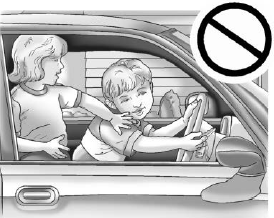
Warning
Leaving children in a vehicle with the ignition key is dangerous and children or others could be seriously injured or killed. They could operate the power windows or other controls or make the vehicle move. The windows will function with the keys in the ignition, and children or others could be caught in the path of a closing window. Do not leave children in a vehicle with the ignition key.